
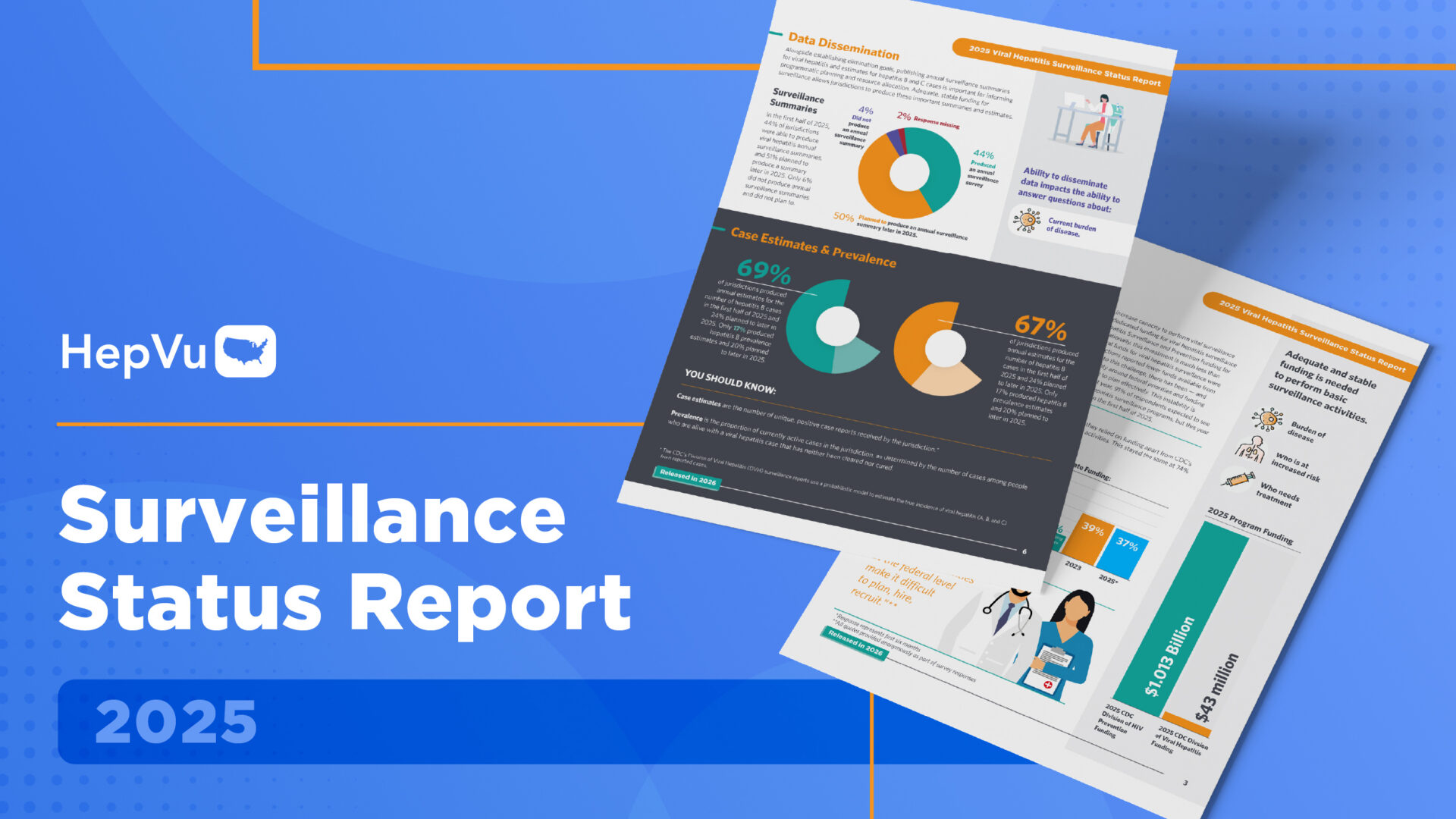
ATLANTA, GA — April 17, 2026 — HepVu and NASTAD today released the 2025 Viral Hepatitis Surveillance Status Report, offering a timely look at Hepatitis B and Hepatitis C surveillance capacity across U.S. jurisdictions. Now in its fourth year, the report shows both the progress that jurisdictions have made since 2021 as well as the growing strain that federal funding uncertainty poses.
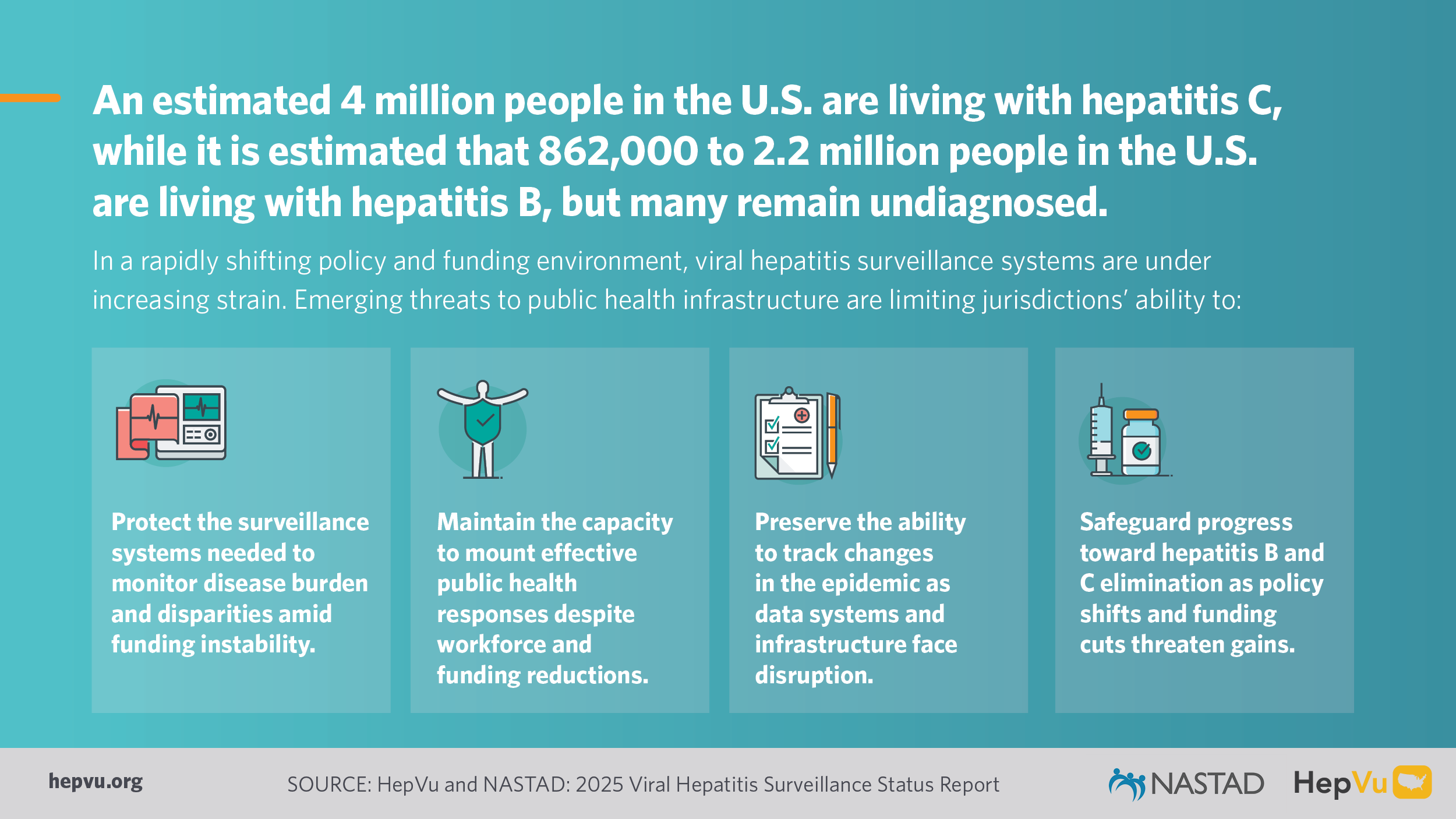
More than 4 million people in the U.S. are estimated to be living with Hepatitis C, while an estimated 862,000 to 2.2 million people in the U.S. were living with Hepatitis B virus in 2021, though many remain undiagnosed. Surveillance activities allow health departments to understand disease burden, identify disparities, direct resources efficiently, and support progress toward national hepatitis elimination.
This year’s report reflects a new cadence for data collection, capturing surveillance practices during the first half of 2025 (January through June) rather than the full calendar year. The shift provides a more current snapshot of jurisdictional capacity and emerging challenges. Survey findings are based on responses from 54 of 59 jurisdictions, representing a 92% response rate.
Since 2021, expanded CDC support for viral hepatitis surveillance has helped jurisdictions strengthen staffing, improve annual surveillance reporting, expand matching of individuals across health datasets, and advance viral hepatitis elimination planning. But the report also makes clear that those gains remain fragile in an unstable funding environment.
“Over the past four years, jurisdictions have made real progress in building stronger viral hepatitis surveillance systems, and this report shows federal investments have made a measurable difference,” said Heather Bradley, PhD, Associate Professor at Emory Rollins School of Public Health, and one of the report’s initiators. “The challenge right now is not simply the threat of cuts themselves — it is the chaos that ongoing uncertainty creates for programs that depend on stability to hire, plan, and respond effectively.”
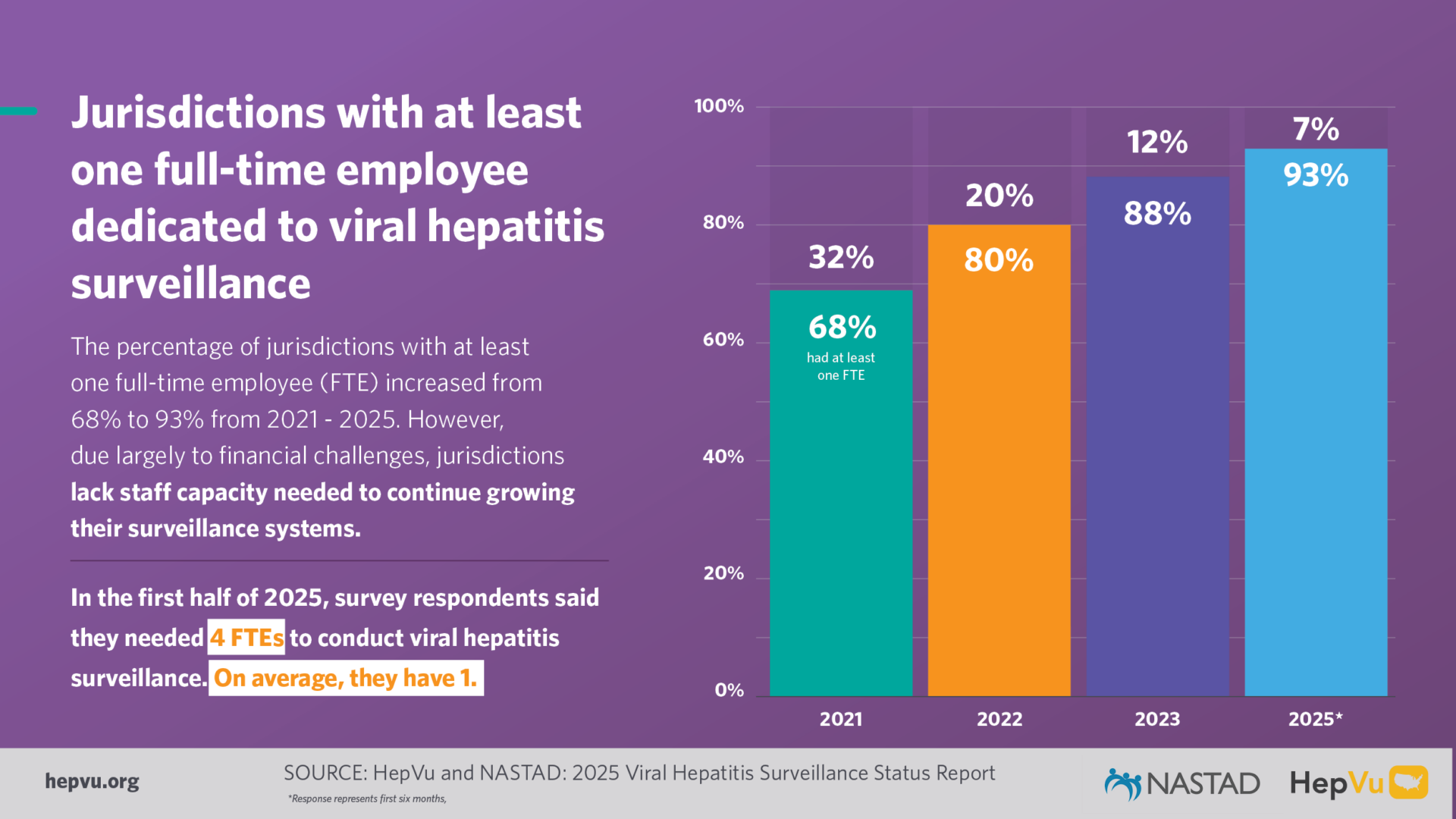
The report underscores both the value of investment in surveillance, and the strain jurisdictions continue to face. In 2025, 93% of jurisdictions reported having at least one full-time employee dedicated to viral hepatitis surveillance, up from 68% of jurisdictions in 2021. At the same time, respondents reported that they would need 4 FTEs, on average, to conduct viral hepatitis surveillance, but on average they have only 1.
Funding instability is also shaping expectations for the future. Last year, 91% of respondents expected meaningful improvements in their viral hepatitis surveillance programs, but this year only 61% expected to see improvements in the first half of 2025.
“Surveillance is the foundation for effective public health responses to Hepatitis B and Hepatitis C,” said Bradley. “If jurisdictions lose staff or infrastructure, they lose the ability to track the epidemics, identify who is being left behind, and respond with the urgency that elimination will require.”
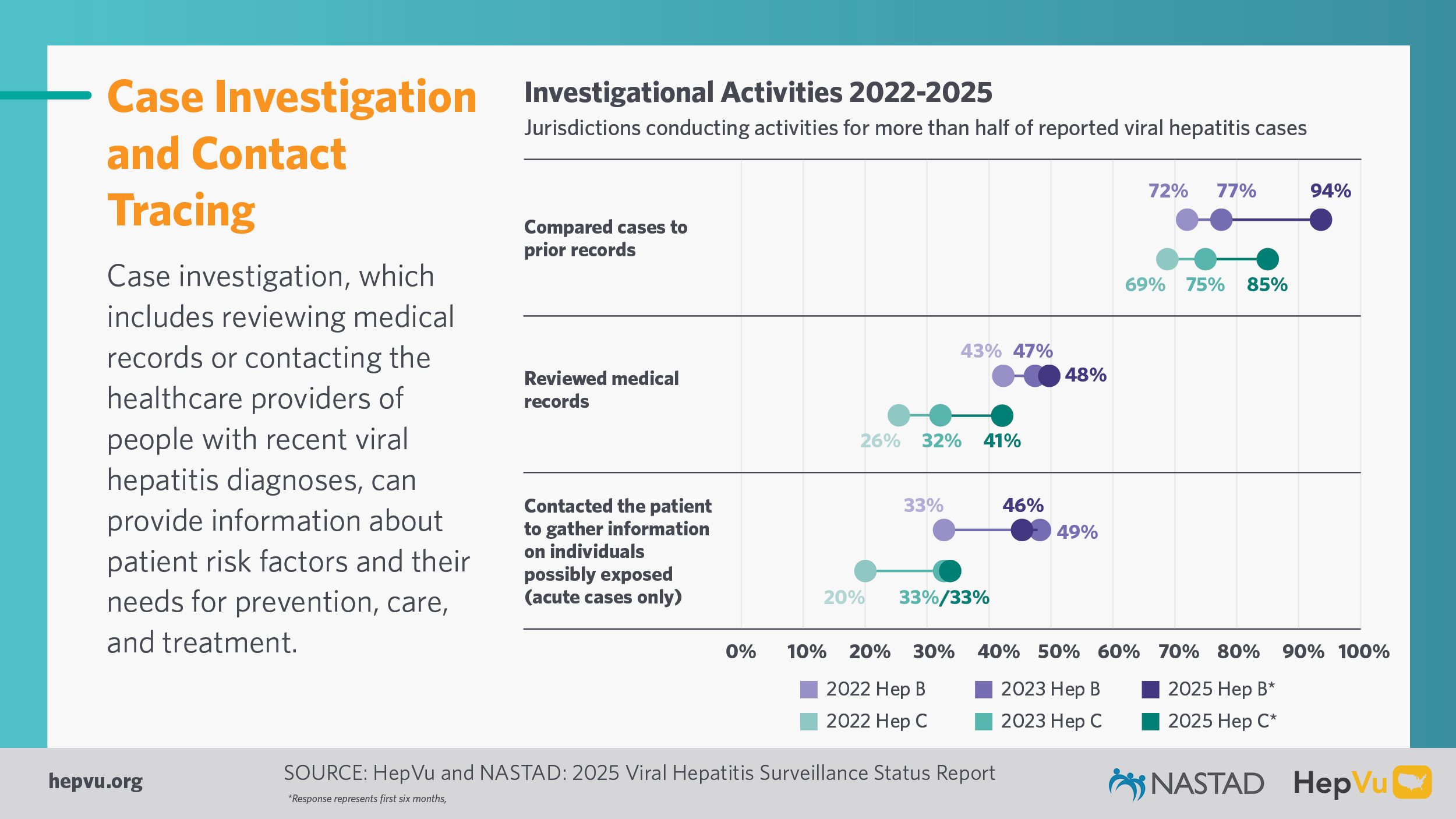
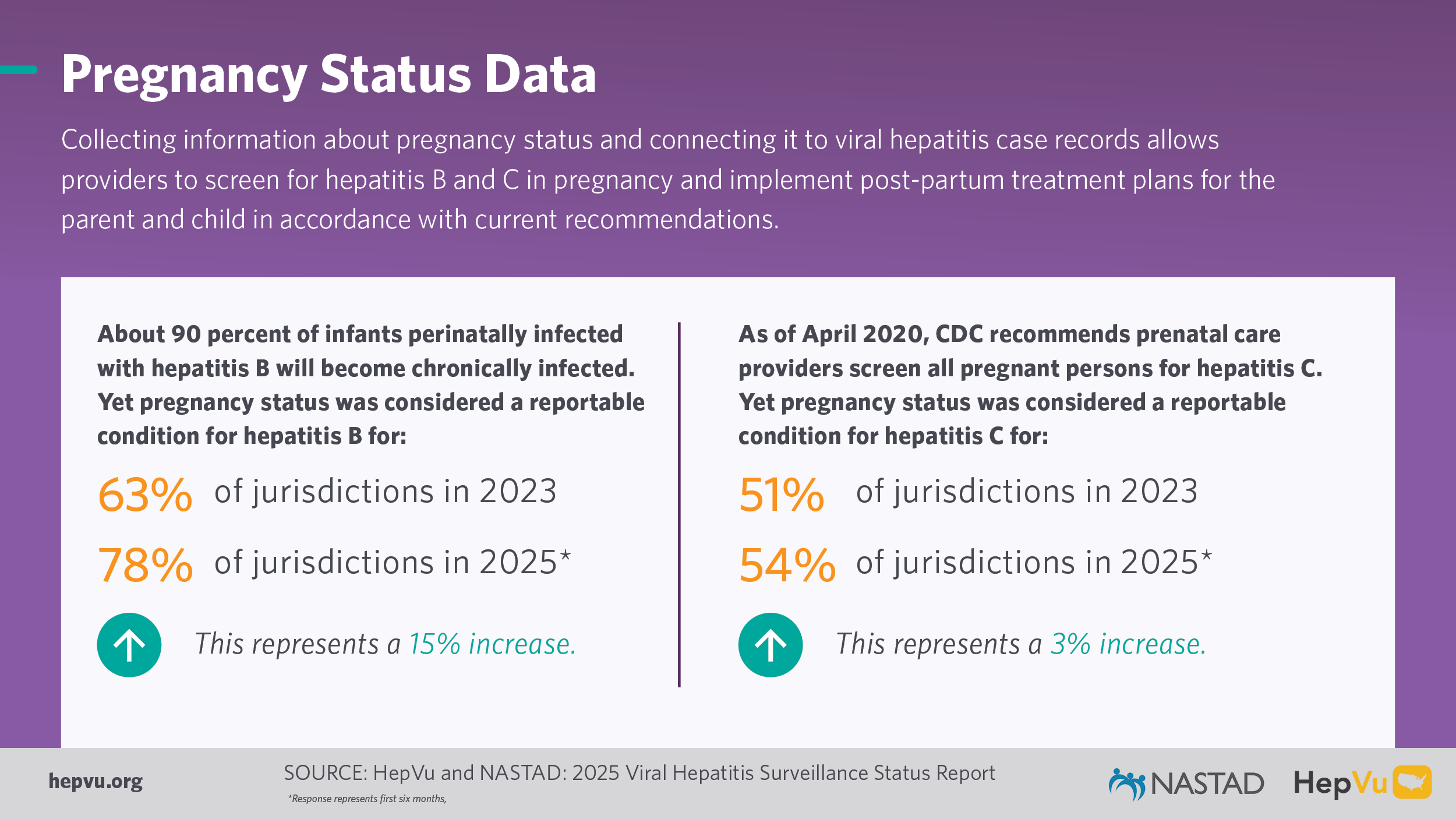

Key findings from the report include:
- Staffing capacity has improved but remains insufficient. The share of jurisdictions with at least one dedicated viral hepatitis surveillance FTE increased from 68% in 2021 to 93% in 2025, yet jurisdictions reported needing substantially more staff to carry out core activities.
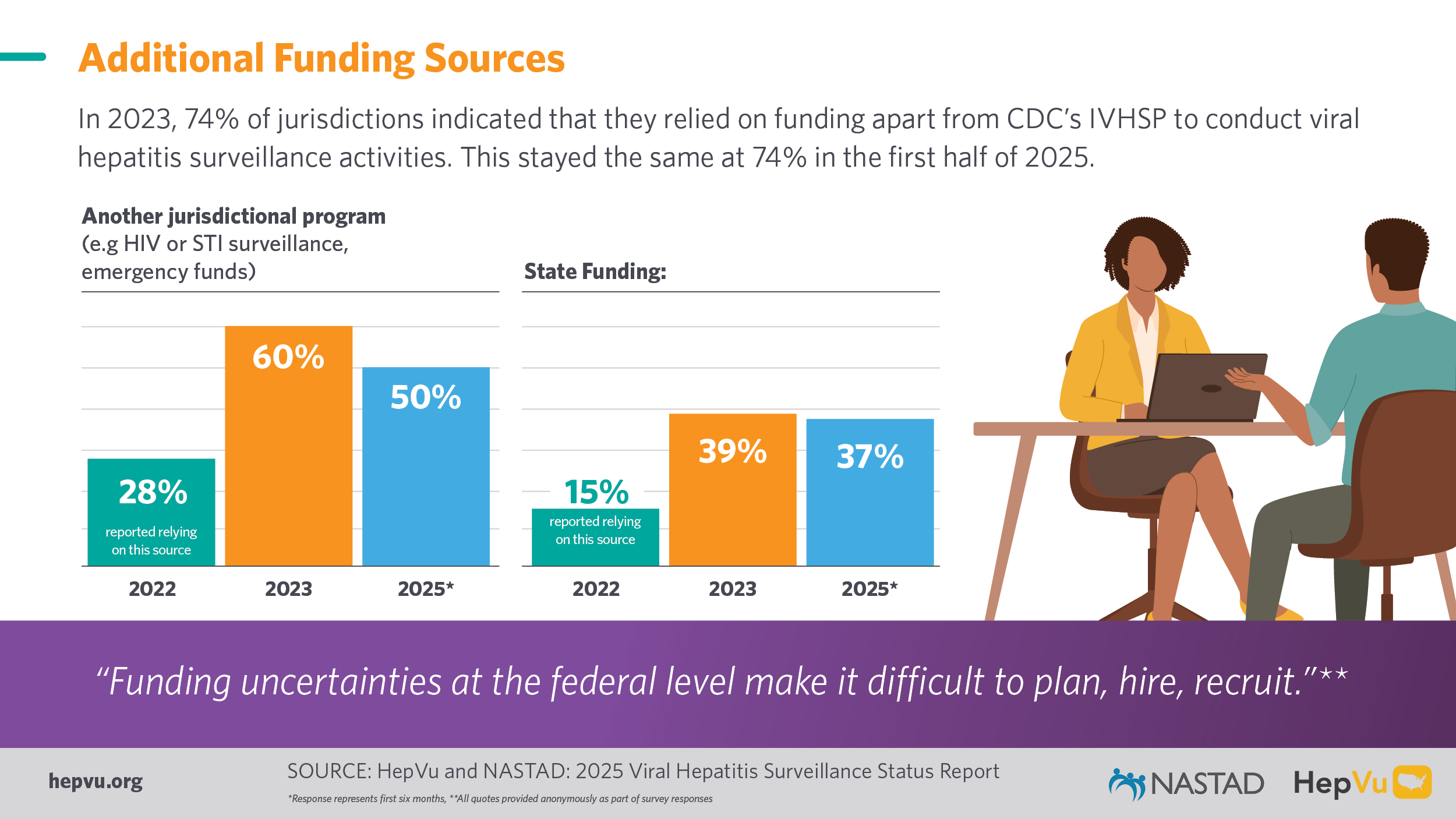
- Funding uncertainty is constraining planning and growth. Federal viral hepatitis surveillance funding remained essentially flat in FY2025, and jurisdictions reported less support from other health department programs, even as many continue relying on braided funding streams.
- Data dissemination capacity remains sub-optimal. In the first half of 2025, 44% of jurisdictions had produced annual viral hepatitis surveillance summaries and 50% planned to later in the year.
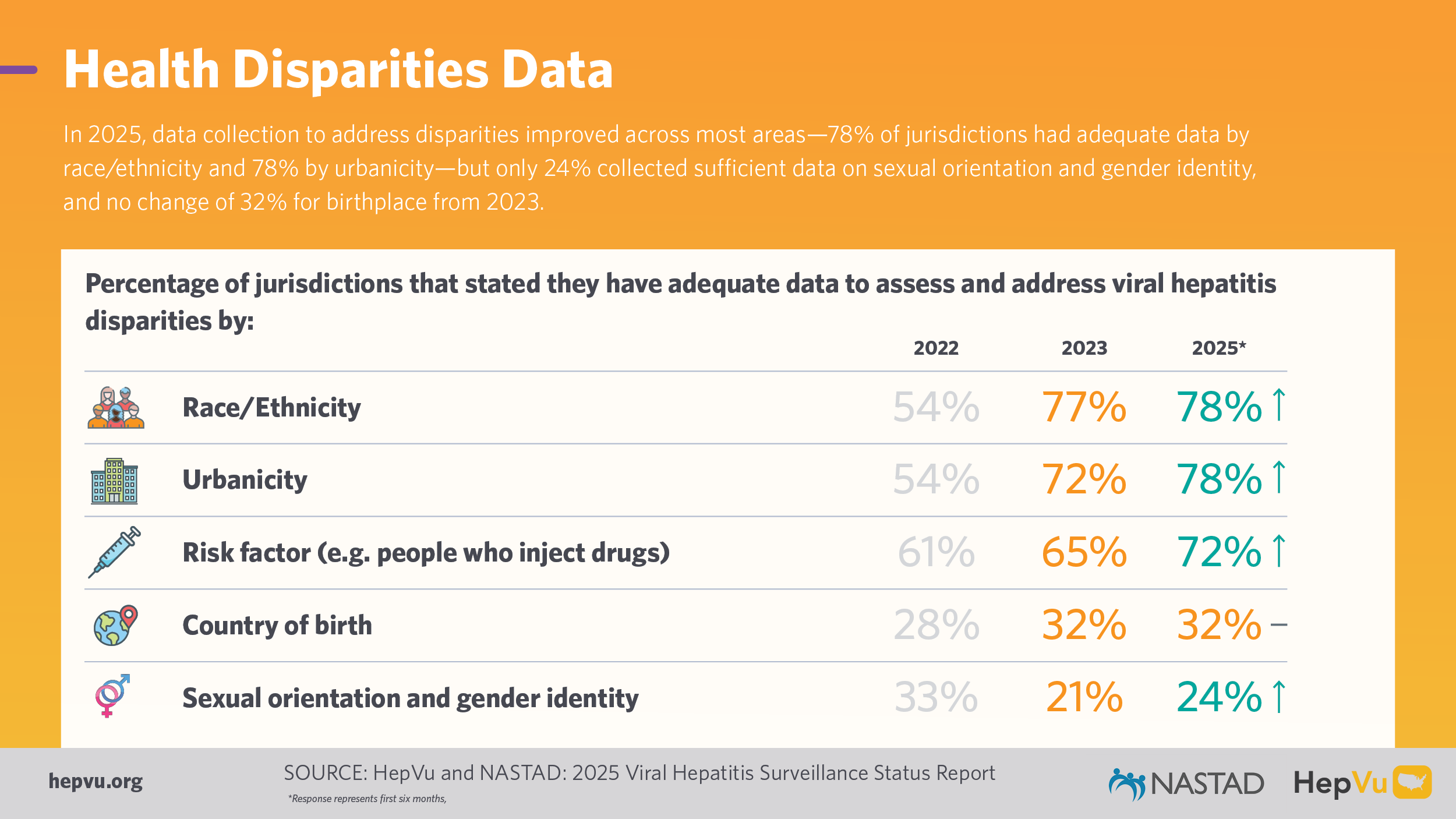
- Capacity to measure disparities has improved in some areas. In 2025, 78% of jurisdictions said they had adequate data to assess disparities in viral hepatitis burden by race/ethnicity, 78% by urbanicity, and 72% by risk factor.
- Elimination planning has expanded, but implementation capacity lags. Jurisdictions with viral hepatitis elimination plans increased from 43% in 2021 to 89% in 2025, yet only 22% reported having the capacity to make progress toward achieving elimination goals, and only 6% said they could do so at current CDC funding levels.
One survey respondent described the stakes clearly: “Loss of staff is the primary concern. If surveillance funding is not renewed, the majority of hepatitis surveillance activities in our jurisdiction would cease.”
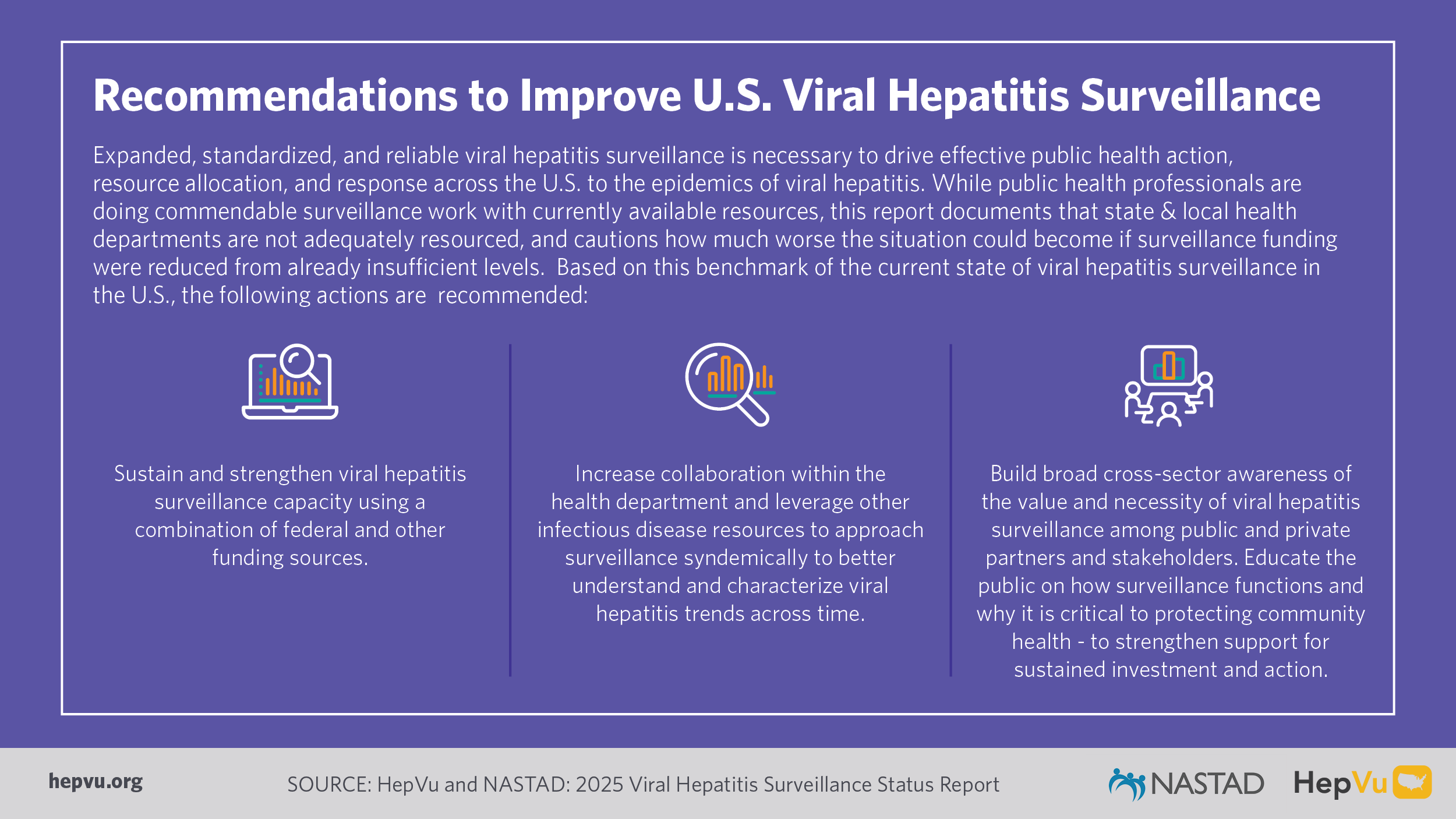
The report also reinforces that surveillance alone is not enough. Data systems must be paired with programmatic infrastructure that can connect people to care, support treatment and cure, expand immunization, and reach communities most affected by viral hepatitis.
The 2025 Viral Hepatitis Surveillance Status Report is available here.
About the survey
In summer 2025, HepVu and NASTAD sent a survey requesting information on Hepatitis B and Hepatitis C surveillance practices to 59 jurisdictions across the U.S. HepVu and NASTAD began collecting these data in 2022 and have continued annually, producing a status report describing findings nationally and by jurisdiction. This year’s report is the fourth annual edition and reflects surveillance practices during the first six months of 2025 to increase timeliness.
About HepVu
HepVu is an interactive online mapping tool that visualizes the impact of the viral hepatitis epidemics on communities across the United States to increase disease awareness and promote data-driven public health decision-making.